All posts by A Green Mouse

Recipe for Pâte à Sel

Pâte à Sel Recipe + Instructions:

French children know all about ‘pâte à sel’. It is an excellent activity for anyone, and the recipe is easy.
Put aside the play dough or plasticine for a while, introduce children to ‘pâte à sel’, and enjoy the wonderful creations.
Creations made out of pâte à sel will last for years.

The Recipe:

Pâte à sel ingredients:
1 cup salt
1 cup warm water
2 cups flour
(make sure the same cup-size is used for all ingredients)

Basic Kit:
knife
rolling pin
tooth picks (for decorating, making shapes, and for sticking shapes to each other)
tin foil – for filling out the inside of larger models to make sure they cook thoroughly
paint brush – use with tiny amounts of water to stick shapes together & for wetting the dough
acryllic paints and different-sized brushes for painting the finished models
wood varnish

Method:

Mix the salt and flour together first, then slowly add the water and work to a smooth workable paste.  If it is too sticky add a little more flour and salt which you should mix together first.

The dough will be easier to work with if the atmosphere is quite humid, and will dry out more quickly if it is a dry day.  Have a paint brush handy to brush the mixture with a little water if it starts drying out.  Also keep cling film or a plastic bag nearby to wrap the spare dough in, either while you are working with just some of the dough, or if you need a break.  (The dough can be kept for several days in an airtight bag – just brush it with a little water to get it going again)

Be as inventive as you wish in your design, choice of materials, implements, food colouring etc..

Useful Tip:
If you want to dangle your creation, make a hole in it before you cook it, and don’t make it too heavy.
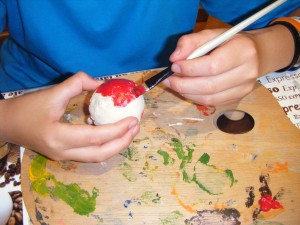
Pâte à sel - French activity for Children
Pâte à sel – French activity for Children

Cooking time:
Very slow oven (100 degrees) for several hours.  Turn the models over during cooking and make sure they are thoroughly dried out on both sides.
Give the finished models 1-2 coats of wood varnish to preserve them.  And finally, leave the varnish to dry for 24 hours.

 Pâte à sel can be as intricate and detailed as you like:
Numbers
are a fun, easy thing to start with.  Children like making the number for their age and then decorating it with a few tiny flowers and shapes.

In the video below you will see an angry bird being made!
Video

Spanish Pencil Case Vocabulary

Spanish Pencil Case Vocabulary

Learn the Vocabulary + Gender for pencil case items in Spanish
Un estuche =  a pencil case
Listen and join in with the Video Clip.

Do you care what kind of pencil case you have?  Is there a latest trend?  Why?  Does it matter?

Vocabulary

Necesito un estuche.
I need a pencil case
Adentro me hace falta …
Inside I need …
una pluma                      a pen
un lápiz                            a pencil
una goma                       a rubber
unas tijeras                   some scissors
una regla                        a ruler
un cartucho                  a cartridge
cartuchos                       cartridges
un bolígrafo                  a biro
un lápiz de color.        a coloured pencil
lápices de colores     coloured pencils
un sacapuntas             a pencil sharpener

Pencil Case Vocabulary with the 1st person of the verb TENER:  Tengo … (I have):
Tengo + Pencil Case Items

Online Quiz

I have + Pencil Case in Spanish Quiz

My pencil case in French

My Pencil Case in French

Learn the vocabulary for items in a pencil case and their gender:   Short sentences in French introduce pencil case items using the 1st person from the verb Avoir + an indefinite article (un, une, des):
J’ai un crayon     – I have a pencil
J’ai une gomme  – I have a rubber
J’ai des cartouches – I have some cartridges

Qu’est-ce qu’il y a dans ma trousse?
What is in my pencil case?

Listen and join in with the video clip.
Do the  Online Quiz and complete the Worksheet.

Pencil Case Vocabulary:

Mes affaires (fpl)  my things
La trousse (f)        the pencil case
La gomme (f)        the rubber
La colle (f)             the glue
La règle (f)             the ruler
La cartouche (f)   the cartridge
Les cartouches (fpl) the cartridges

Le sac à dos (m)   the rucksack
Le stylo (m)            the pen
Le crayon (m)        the pencil
Le taille-crayon (m)
the pencil sharpener

Le stylo à bille (m) the biro
Le crayon de couleur (m)
the coloured pencil

Les crayons de couleur (mpl)
the coloured pencils
Les ciseaux (mpl) the scissors

La Rentrée!  =  The start of the new school year in French.

Do you care what kind of pencil case you have? Is there a latest trend? Why? Does it matter? Consider these questions to get more involved in the subject matter ..!
Possessive Adjectives …  I don’t want anyone to touch MY pencil case:
Ma trousse(f) = My pencil case!
I don’t want anyone to touch my rucksack:
Mon sac à dos(m) = My rucksack!

Note:
de la colle = some glue

Video

Online Quiz

This quiz is also available on its own separate page here:
 Online Quiz

To learn how to use AVOIR in different situations go to:
Avoir Practice:  J’ai 

What's in your pencil case in French?

Biscuit Recipe in Spanish

Cooking in Spanish for Kids

Simple Biscuit Recipe and Listening Practice for Children in Spanish. Video and description in the 3rd person present tense about making the biscuits and tidying up afterwards.
Free printable Biscuits in Spanish Recipe Worksheet
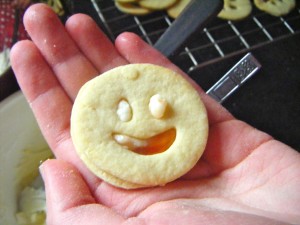
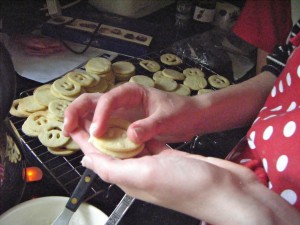
Baking practice in Spanish …  Friendly biscuits at the end.

Cooking Vocabulary:

la harina (f)                 the flour
la mantequilla (f)    the butter
el azúcar (m)              the sugar
la mermelada (f)      the jam
el glaseado (m)         the icing
El horno (m)               the oven

HAY QUE  = I, you, we, one must/need/should …
Use Hay que + a second verb in the infinitive.
E.g.:

Hay que fregar los platos =
– I must wash the dishes
Hay que ordenar =  
– We need to tidy up

Recipe ingredients:

175g de mantequilla     = 175g of butter
175g de azúcar                  = 175g of sugar
350g de harina                  = 350g of flour
1 huevo                                  = an egg
una cucharita de vainilla
=  a little spoonful of vanilla essence

Method:
Mix together the butter and the sugar
Add the flour, egg and vanilla.
Make a dough

Video

Downloadable PDF Biscuits in Spanish Recipe Worksheet

The video has subtitles in Spanish AND English

Video Transcript

LA RECETA
175g de mantequilla
175g de azúcar
350g de harina
Un huevo
una cucharita de vainilla
(El niño) mezla la mantequilla y el azúcar
y agrega la harina, el huevo y la vainilla

HORNO:  180 C
TIEMPO:  12 – 15 mns

(El niño) estira la masa con el rodillo.
(El niño) fabrica las galletas con moldes.

Las galletas están en el horno.

Las galletas redondas están listas,
y las caritas también.

Ahora hay que poner el glaseado,
y después la mermelada.

Ahora la carita va encima.
Mira.  Ya está.
Cuatro caritas para comer.

Hay que ordenar la cocina,
y hay que fregar los platos.

Ahora podemos comer las galletas.

– – – – – –

For an authentic Biscuit Recipe from South America and an introduction to Argentina go to:
Argentina + Alfajores

More Practice:
Spanish Food and Drink Resources

Cooking in Spanish for Children
Biscuits! Cooking in Spanish for Children

Biscuit Recipe in French

Biscuit Recipe in French

Follow two children as they make ‘happy face’ biscuits with commentary in French.
– Learn French cooking vocabulary
– Video clip + Description in French of two children making biscuits
– Easy biscuit recipe
– Gap Fill PDF Worksheet

The Recipe:

ingredients                  les ingrédients
175g butter                 175g de beurre
175g sugar                   175g de sucre
350g plain flour          350g de farine
1 beaten egg                 un oeuf battu
vanilla essence            de la vanille 

Method:
Mix the butter and sugar. Add the flour. Add the egg and vanilla.  Mix the dough with a little milk.  Oven Temp: 180C. Time: 12-15mns

Préparation:

Mélangez le beurre et le sucre.  Ajoutez la farine.  Ajoutez l’oeuf et la vanille.   Mélangez la pâte avec un peu de lait. Température du four: 180C
Temps de cuisson: 12-15mns

French Cooking Vocabulary:

la farine          the flour
le sucre           the sugar
le beurre         the butter
la pâte             the dough/pastry
la cuisson       the cooking
le four             the oven
le glaçage       the icing
la confiture    the jam
la vaisselle     the washing-up
temps de cuisson (m)  cooking time

Downloadable Gap Fill Translation PDF Worksheet

Video transcript in French:

La Recette
Mélangez:
200g de farine,
150g de sucre,
150g de beurre

Température du four 180C

Maintenant regardez et écoutez:
Un frère et une soeur font des biscuits.
Le frère roule la pâte.
Il fait des visages!
Il met les biscuits dans le four.
Temps de cuisson:  10 à 15 minutes.
Les biscuits sont cuits.
Le garçon sort les biscuits du four.
Sa soeur met du glaçage sur chacun, et de la confiture.
Elle finit les biscuits.
Le premier biscuit est terminé.
Ils ont l’air bon!
Maintenant il faut ranger.
Et il faut faire la vaisselle.
Il y a des biscuits pour tout le monde.

Cooking in French for Children: Biscuit Recipe

Follow up:
Here is a recipe for for delicious French biscuits from Brittany.  They are called ‘Palets Bretons’:
Recipe for Palets Bretons

Bagpipes in Buenos Aires

Tango and Bagpipes in Buenos Aires

Buenos Aires is a melting pot of many cultures and traditions.
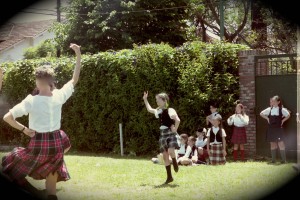
There is even a small Scottish Dancing group! –  It is a tradition handed down by those who moved to Argentina to help build the railways perhaps.
Walk through one of the parks and you might just come across somebody practising the bagpipes!

Buenos Aires has several bilingual schools which offer Scottish dancing lessons!  Eg:

Scottish Dancing in Buenos Aires

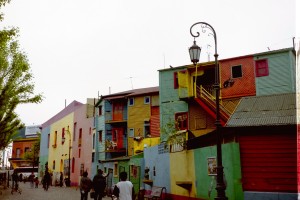
Of course TANGO is the dance which Buenos Aires is best known for.  It originated in the area of the city known as La Boca – an old and very colourful area near the port:

Image for La Boca, Buenos Aires
La Boca, Buenos Aires


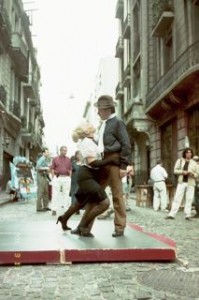
‘El Viejo Almacén’ is an example of a well-known tango venue.  It is also most enjoyable to stroll through the streets of San Telmo where, at weekends, there are often people dancing the tango in the street.  Here is a picture taken of people enjoying themselves in San Telmo on a normal weekend:

Fruit in French

Fruit in French

Learn the names of Fruit in French + their gender.
Video clip,  online quiz  + free printable worksheets:

Names of Fruit + Articles in French Worksheet

Fruit in French Gap Fill Worksheet

Fruit is introduced using Indefinite Articles –
un, une, des:

Un =   a, an with masculine singular words
Une
=   a, an     with feminine singular words
Des   =   Some    with all words in the plural

un melon(m)             a melon
un citron(m)             a lemon
un raisin blanc(m)  a white grape
un abricot(m)           an apricot
une mangue(f)         a mango
une cerise(f)             a cherry
une figue(f)               a fig
une nectarine(f)      a nectarine
une pêche(f)             a peach
une mandarine(f)   a mandarin (tangerine)
une pomme(f)          an apple
une poire(f)               a pear
une prune(f)             a plum
une banane(f)           a banana
une fraise(f)              a strawberry

Les  = The (in the plural)
Short simple phrases are used to talk about fruit in the video:
J’aime les cerises             =  I like cherries
J’adore les abricots         =  I love apricots
Les citrons sont amers  =  Lemons are bitter

Les (the) is used in French but not in English except in sentences that refer to particular fruit.
E.g:
The apples on the table are for anyone.
The cherries on the menu come from France.

– – –

Avoir l’air délicieux = to look delicious
Ces = These/Those  (It is a demonstrative adjective)
Ces fraises ont l’air délicieux =
These strawberries look delicious

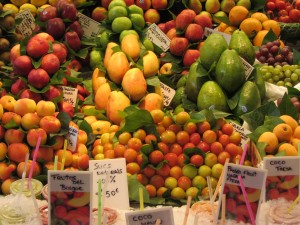
Video

Free Printable Worksheets:
Names of Fruit + Articles in French Worksheet

Online Quiz

This quiz is also available on its own separate page here:
online quiz

Fruit in French Gap Fill Worksheet

Phrases from the Video:

Les citrons sont amers  
Lemons are bitter.

D’autres melons
Other melons

J’aime beaucoup les cerises
I really like cherries.

Tu aimes les figues?
Do you like figs?

Moi, j’aime les figues.
(Me), I like figs.

Elles ont l’air délicieux.
They look delicious.

Des raisins blancs aussi
Aussi = as well
Some white grapes as well.

Les pommes sont rouges
Apples are red.
(Use ‘The apples are red’  if talking about particular apples)

Maintenant des poires
Now some pears.

Ces fraises ont l’air délicieux.
Ces =  These/Those
These/those strawberries look delicious.

Enfin = Finally
Enfin des abricots
Finally some apricots.

J’adore les abricots
I love apricots!

. . . .

More Food and Drink resources available here:
French Food and Drink Resources

Fruit in Spanish

Fruit in Spanish

Fruit in Spanish Vocabulary, Video,  Online Quiz + Worksheets:
Fruit in Spanish Translation Worksheet
Fruit in Spanish Vocabulary + Grammar

Fruit in Spanish is masculine or feminine.

Vocabulary + Gender

MASCULINE FRUIT:
un mango /a mango – un melón  /a melon  –  un limón  /a lemon  –
un higo  /a fig  –  un melocotón  /a peach  –  un plátano  /a banana
un albaricoque an apricot

FEMININE FRUIT:
una cereza  /a cherry  –  una nectarina  /a nectarine  –
una uva  /a grape  –  una manzana  /an apple  –  una pera  /a pear
una mandarina  /a mandarin  –  una naranja  /an orange
una ciruela  /a plum  –  una fresa  /a strawberry  –
una papaya  /a papaya  –  una piña  /a pineapple
una sandía  /a watermelon

How to say what a fruit is in Spanish:

Es + un/una = it is a ….
Es una cereza = it is a cherry
Es un melón = it is a melon

How to say what kind of fruit you like:

Me gusta la fruta = I like fruit
Always include el, la, los, las in front of the name of the fruit you like.

1. If you can eat a fruit whole use the PLURAL.
     Eg:  apples, pears, bananas etc…
   Me gustan los melocotones
 (I like peaches)
 Me gustan las peras                   (I like pears)

2.  If a fruit is too big to eat whole use the SINGULAR.
      E.g. pineapple, melon …
      Me gusta la sandía  (I like watermelon)

NOTE:  Papayas can be small or very big so:
Me gustan las papayas” … if they are little ones
Me gusta la papaya”         … if it is too big to eat whole.

How about  finding out more about papayas and where they come from?  Here is a picture is of a small papaya you can eat whole:
image for Spanish tropical fruit

Una ensalada de fruta = a fruit salad
Un plato de fruta
            =  a plate of fruit.
Instead of fruit salad, fruit is normally served as a plate of fruit in Latin American countries.
In tropical countries a ‘plato de fruta’ will be a selection of mango, watermelon, papaya, pineapple and melon depending on the time of year.
Papaya is particularly good with lemon juice squeezed over it.

Video in Spanish and English

Online Quiz

This quiz is also available on its own separate page here:
Online Quiz

More Practice:
Spanish Food and Drink Resources

Image for Spanish fruit vocabulary
Fruit in Spanish

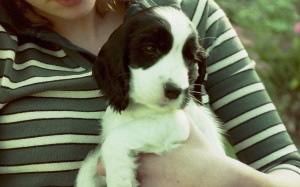
Spanish Story: A New Puppy

Spanish Story – A New Puppy

Spanish Short Story for Children in the 3rd person, present tense.   Video, Online Quiz +  Gap-Fill Worksheet.

Verbs and Vocabulary

Practice in the 3rd person Present Tense:

SER
Es  =  She is
Es hermosa   =  she is beautiful
Es cariñosa    =  she is affectionate

ESTAR
Está  =  She is
Está en el jardín  = she is in the garden.
Está en la ropa sucia
=  she is in the dirty washing.

Tiene miedo    =  She is frightened

Le gusta = she likes
Le gusta jugar =  she likes to play

Le encanta la nieve = She loves the snow

Videos

Video clip with Subtitles in Spanish and English:

Video clip with ONLY Spanish Subtitles:

Spanish Story + Questions Worksheet

Online Quiz

This quiz is also available on its own separate page here:
Online Quiz

image for simple Spanish story

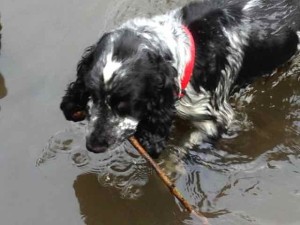
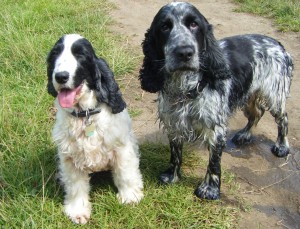
Spanish Story: Dogs at the River

Spanish Story for Children
– Dogs at the River

Spanish short story practice using Verbs in the 3rd person, present tense, to describe the activities of two dogs on a walk by the river.
One likes swimming, the other does not.

Vocabulary, Verbs, Video Clips, Worksheets + Online Quiz

Vocabulary

algo           =  something
también   =  as well

Nouns

La boca (f)                  the mouth
El río (m)                    the river
El agua (m)                 the water
El perro (m)               the dog
Los perros (mpl.)      the dogs
Los barcos (mpl.)      the boats
Un palito (m)              a little stick

Adjectives

mojado/a/os/as       wet
hermoso/a/os/as      beautiful
contento/a/os/as     happy, contented

Verbs

Find these verbs in the story:

Mira  =  Look!
Mira  = he/she looks

Hay = there is/there are

Tiene   =  he/she has
Llega    =  he/she arrives
Sale      =  he/she gets out
Espera = he/she waits

Se llama = he/she is called

Le gusta      = he/she likes
No le gusta = he/she doesn’t like

Le gusta nadar
=  he/she likes swimming
No le gusta nadar
= he/she doesn’t like swimming

Corre   = he/she runs
Corren = they run

Está  = he/she is
Está nadando  = he/she is swimming

El río está hermoso
= the river is (looking) beautiful

Están = they are
Están contentos = they are happy

Billy llega despacio
= Billy arrives slowly
Despacio is an adverb that describes HOW Billy arrives.

Videos

Spanish + English Subtitles:

Spanish + English:

Only Spanish Subtitles:

PDF Worksheets:

Dogs at the River in Spanish Worksheet 1

Dogs at the River in Spanish Worksheet 2

The Story / Video Transcript in Spanish

Mira el río.
Mira el perro.  Se llama Billy.
Le gusta nadar.
¡Está nadando!
Tiene un palito en la boca.
Billy sale del río.
Billy está mojado.
Maggie corre.
A Maggie no le gusta nadar.
Maggie mira algo.
Billy mira algo también.
Hoy el río está hermoso.
Billy está en el agua.
Maggie espera Billy.
Billy llega despacio.
Los dos perros corren.
¡Mira!  Hay barcos.
¡Maggie y Billy están contentos!
¡Hasta luego!
– – – – –

Online Quiz

This quiz is also available on its own separate page here:
Online Quiz

image for Primary Spanish Story

French Story – Dogs at the River

Primary French Story
– Dogs at the River

French Practice for children using verbs in the 3rd person present tense with a Video, Worksheets, and an Online Quiz.
One dog likes swimming, the other does not.
Nager = to swim

Verbs

il arrive          = he arrives
elle attend   = she waits
il nage             = he swims
il a                     = he has
il est                 = he is
il sort               = he gets out of, he leaves
elle regarde = she watches, she looks

il aime  = he likes
elle n’aime pas = she doesn’t like

il/elle court  = he/she runs
ils courent   = they run

 C’est      = it is
il est        = he is
ils sont   = they are

il y a     =  there is, there are
(il y a des cânots = there are boats)

– – –

Adjectives:
mouillé(m)  = wet
(il est mouillé = he is wet)
belle(f) = beautiful
(la rivière est belle = the river is beautiful)

Questions

Qu’est-ce qu’il a?
What does he have? What has he got?

Que fait-il?
What does he do? What is he doing?

Où est Maggie?
Where is Maggie?

Videos

French + English Subtitles:

Audio in French and English:

French Subtitles:

Worksheets:

Worksheet 1
Worksheet 2

Online Quiz

This quiz is also available on its own separate page here:
Online Quiz

image for Primary French Story

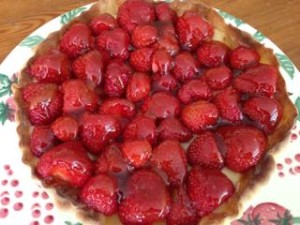
French Strawberry Tart

Tarte aux Fraises Recipe

There are four stages to making a homemade French strawberry tart:

1. Make shortcrust pastry, roll it out thinly, lift it into a 30cm tart tin, and bake it.
2. Make a thick vanilla-flavoured custard (crème pâtissière), pour it onto the cooked pastry case and let it set.
3. Cut strawberries in half and place them neatly over the set custard.
4. Make a sugary glaze to brush over the strawberries

Recipe Instructions

30cm metal tart tin
Oven Temperature:  180 C

1.  Shortcrust Pastry (= pâte brisée):
150g plain flour
75g butter

Method:
Rub the butter into the flour using just the tips of your fingers.
Add just enough cold water to turn the mixture into a ball of pastry dough.
Roll out the dough with a rolling pin, as thinly as possible, on a cool floured surface.
Make sure the pastry is at least 3cm wider than the pastry tin.
Lift it into the tin.  Cut off the leftover pastry with a knife and press a fork around the edges.
Cover the pastry base with greaseproof paper and something heavy that can go in the oven, e.g. baking beans:

image of baking beans

Bake for 15mns at 180 C
Check that the base is cooked, and leave to cool.

2.  Thick custard – Crème Pâtissière:
1/2 litre milk
4 egg yolks
100g sugar
1 tspn vanilla
30g plain flour
pinch salt
Method:
Heat the milk in a saucepan.
Mix egg yolks, sugar and flour in a bowl.
Gradually pour the warmed milk into the egg mixture, stirring all the time.
Pour the custard back into the saucepan and bring it slowly to the boil until the mixture starts to thicken.
Add vanilla + a pinch of salt and continue stirring for about a minute.
Turn off the heat, wait a few seconds, and then pour the custard into the pastry case.

3. Strawberries:
Cut 750g of strawberries in half, or quarters if very large, and place neatly over the crème pâtissière, starting from the outside of the tin and moving in circles into the middle.

4. Glaze:
Heat 2 tablespoons of fruit jelly/jam (Blackberry jelly is great) with 1 teaspoon of water, and brush over all the strawberries with a pastry brush.

Voilà!

image for French strawberry tart

– – – –

Tarte aux prunes (Plum Tart):

Delicious variation on the recipe for Tarte aux Fraises:
Follow the recipe for tarte aux fraises but use 2lbs of fresh plums instead of the strawberries.
The big difference is that the plums need to be cooked first:
Cut the plums in half, take out the stones, and place them flesh down onto a heavy-based non-stick pan.
Sprinkle them with lots of caster or granulated sugar.
Bake until the skins of the plums look/taste quite caramelised.
Slide the plums carefully, one by one, onto the custard trying to keep the plums whole and with their skins on top.
Cool and eat!

Tarte aux pommes (Apple Tart):

Another absolutely delicious variation on Tarte aux Fraises!
This time lightly butter two baking trays.
Slice 6 or 7 apples, thinly but not too thinly, with their skins on, and lay them on the trays.
Bake the apples until soft.
Peel them gently off the trays and place them decoratively on the crème pâtissière.
Brush on a sugary glaze like the one in the strawberry tart recipe above.

Bought from a good French pâtisserie, these pastries are quite expensive, a really lovely treat, beautifully made with care and precision.
Much cheaper versions are available in large supermarkets, but they never look or taste quite as special.

¡Vale la pena! It’s worth it …!

¡Vale la pena! = It’s worth it in Spanish.
It’s literal translation = It’s worth the pain!
This is the first post by A Green Mouse, a free website and YouTube channel created to provide worthwhile early language practice in French and Spanish.

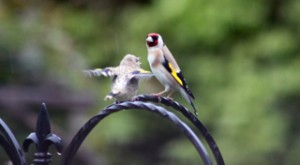
The image of the goldfinch chick below, beak open, hopeful and enthusiastic, symbolises the carefree energy and enthusiasm of children, and all that A Green Mouse stands for.

Children can develop very good pronunciation in a second language if they are exposed to it early enough.
It is a question of opportunity, not one available to all children, so this website is accessible and free to try to reach out and provide it for any child.

Accessible French and Spanish Practice for anyone … 

We all want to help our little guys to fly …!

Image for A Green Mouse Blog

Having a second language feels good, it makes life more interesting, it is good for the brain.
By starting young we give our children a better chance of success.